


“Leave lasting benefits for host communities” - Ga Mantse urge mining firms


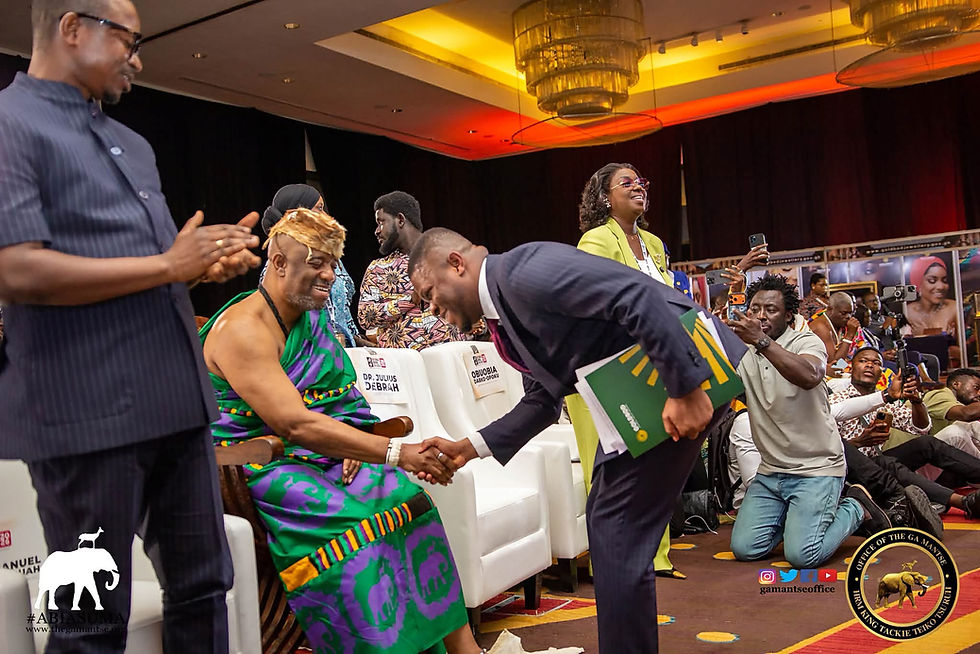
The Ga Mantse, Nii Tackie Teiko Tsuru II, has challenged mining companies and other industry stakeholders to ensure that communities hosting mining operations are left with sustainable livelihoods and development gains long after mineral extraction has ended.
He said mining must not be viewed only as an avenue for generating revenue and foreign exchange, but as an activity that carries significant responsibilities towards the people and environments in which it takes place.

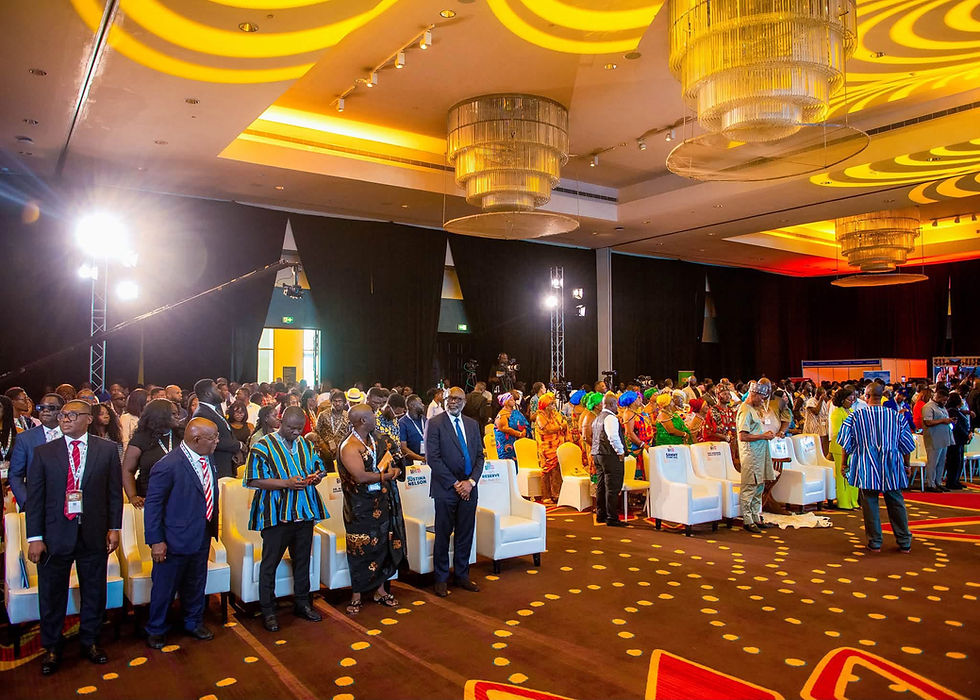
King Tackie Teiko Tsuru II made the call at the National Mining Dialogue 2026 in Accra, where stakeholders examined ways of strengthening local participation and rebuilding public confidence in the mining sector.
He stressed that land remains a critical inheritance and the foundation of community life, arguing that mining activities must therefore be undertaken in ways that protect the interests of present and future generations.

According to the Ga Mantse, responsible mining can create lasting development opportunities when revenues and investments are channelled into infrastructure, education, healthcare, potable water, skills development and employment for people in host communities.
He cautioned mining companies against focusing narrowly on immediate commercial returns while leaving behind environmental degradation, weakened livelihoods and communities with limited economic opportunities after mine closure.

The Ga Mantse’s position formed part of broader calls at the dialogue for a mining sector that delivers greater value to Ghanaians and host communities.
Chief Executive Officer of the Ghana Gold Board (GoldBod), Sammy Gyamfi, called for deliberate policies to increase Ghanaian ownership and participation throughout the mining value chain.

Mr Gyamfi said Ghana’s mining agenda should go beyond increasing gold production to ensuring that Ghanaians have meaningful stakes in exploration, mine development, mining services, refining, processing and other downstream activities.
He argued that the country continues to lose significant economic value through foreign ownership, imported inputs, external financing and limited domestic processing.

He cited the mining town of Obuasi as an example of why mineral extraction must be more closely connected to local economic transformation and reinvestment.
Mr Gyamfi advocated increased local ownership, expanded refining and processing capacity and greater domestic manufacturing to ensure that a larger share of the wealth generated from Ghana’s minerals remains within the economy.
He also proposed an “Involve, Protect, Expand” approach to rebuilding confidence among mining communities, with particular attention to creating opportunities for young people and local residents to participate in and benefit from the industry.
Deputy Minister for Lands and Natural Resources, Dr Alhaji Yusif Sulemana, speaking on behalf of sector Minister Emmanuel Armah-Kofi Buah, said the government’s assessment of mining success must extend beyond production figures, investment, exports and revenue generated for the state.

He said the real measure should also include the extent to which mining contributes to the economic and social advancement of communities where mineral resources are extracted.
Dr Sulemana said local content should not be reduced to the employment of Ghanaians. It must also create opportunities for Ghanaian businesses, strengthen skills, facilitate technology transfer and increase the amount of value retained within the country.

He pointed to the Catchment Compact as a mechanism for bringing mining companies, communities and other stakeholders together to identify and agree on practical development priorities.
The Deputy Minister maintained that companies could not secure a lasting social licence to operate through donations and corporate social responsibility projects alone.

He said trust would have to be built through transparency, accountability, meaningful community engagement and tangible development outcomes.
Government, he added, was strengthening regulatory measures, including requirements for major mining operations to develop Community Engagement and Social Impact Assessment Plans.

Development Agreements were also being considered to establish clearer and more binding development commitments between mining companies and affected communities.
Meanwhile, Deputy Chief Executive in charge of Support Services at the Minerals Commission, Emmanuel Anyimah, warned large-scale mining companies that mineral rights granted by the state come with legally binding obligations.

Mr Anyimah said companies must comply with the terms of their mineral agreements, environmental permits and approved mine operating plans, while meeting reporting requirements and paying royalties, fees, ground rent and taxes within the prescribed periods.
He also stressed the need for stronger health, safety and environmental practices, warning that breaches of licence conditions could lead to regulatory action, including administrative penalties, suspension or revocation of mineral rights.
On local participation, Mr Anyimah said the Minerals and Mining (Local Content and Local Participation) Regulations, 2020 (L.I. 2431), required mining companies to create meaningful opportunities for Ghanaians through employment, procurement, skills development, technology transfer and business partnerships.
He encouraged companies to deepen collaboration with Ghanaian enterprises, including through joint ventures and technology transfer, to enable local businesses to move higher up the mining value chain.

The Minerals Commission, he said, would also intensify monitoring, inspections and compliance audits from the fourth quarter of 2026.
The National Mining Dialogue was held under the theme “Mining, Local Content and the Catchment Compact: Rethinking the Social Licence to Operate.”

The discussions focused on how Ghana can derive greater economic and social value from its mineral resources while protecting communities and the environment.
The common thread running through the discussions was the need to move from extraction-focused mining to a model that delivers lasting economic opportunities, stronger local participation and sustainable development for communities long after mining operations have ceased.
Story by: Joshua Kwabena Smith


Comments