


“Inflation in 2025 driven by domestic, external forces” — Dr. Zakari Mumuni


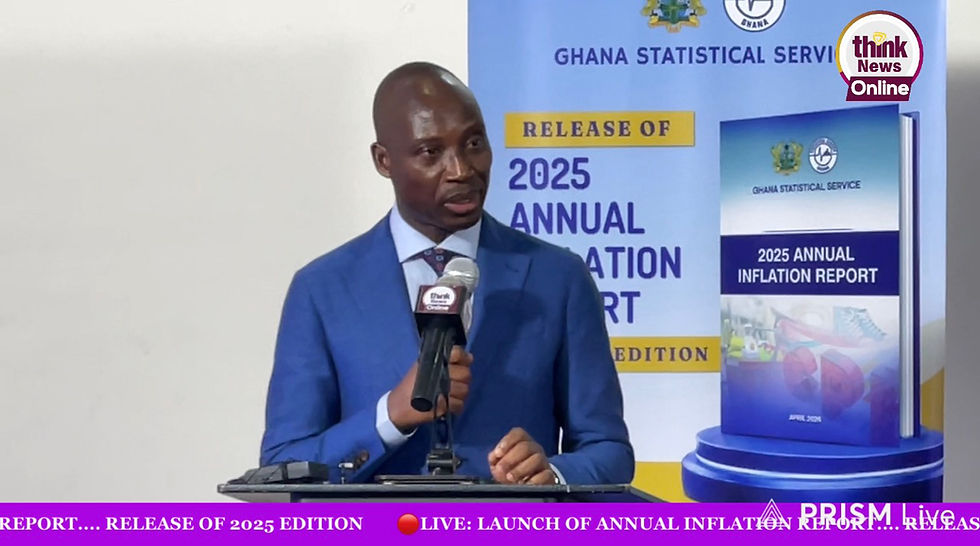
Dr. Zakari Mumuni, First Deputy Governor of the Bank of Ghana, has revealed that Ghana’s inflation process in 2025 reflected a combination of both domestic and external influences, highlighting the complexity of price developments within the economy.
Speaking at the official release of the 2025 Annual Inflation Report, Dr. Mumuni explained that key drivers of inflation during the year included exchange rate fluctuations, rising food prices, and movements in global commodity markets.
According to him, these factors interacted in ways that significantly shaped overall inflation trends across the country.
He further indicated that policy measures implemented by the central bank—particularly monetary tightening—played a decisive role in moderating inflationary pressures.
While acknowledging that such measures often come with short-term economic costs, he stressed that they were necessary to anchor inflation expectations and restore stability within the macroeconomic environment.

Dr. Mumuni emphasised that inflation should not be viewed merely as a headline figure, but rather as a multidimensional process that requires detailed analysis of its composition and underlying drivers.
He noted that distinguishing between temporary shocks and persistent pressures is crucial for effective monetary policy formulation.
The First Deputy Governor also underscored the importance of high-quality data and deeper analytical frameworks, pointing out that the Annual Inflation Report provides a more comprehensive assessment of inflation dynamics over time.
He added that such reports strengthen transparency, enhance policy credibility, and support informed decision-making.
He reaffirmed the central bank’s commitment to maintaining price stability, noting that sustained low inflation depends not only on sound policy decisions but also on strong institutional collaboration and reliable statistical data.

Dr. Mumuni concluded by commending the Ghana Statistical Service for producing the report, describing it as a vital tool that will continue to shape macroeconomic analysis and policy direction in Ghana.
On his part, Chairman of the Governing Board of the Ghana Statistical Service, Dr. Yaw Baah underscored the critical role of credible data in driving sound economic decisions and strengthening governance in the country.
Dr. Baah described the publication as a significant milestone, marking a shift not only in the type of data produced but also in how the institution serves national development.
According to him, “strong economies are built on strong decisions, and strong decisions depend on credible data,” stressing that the Statistical Service plays a vital role in ensuring policies are grounded in facts rather than assumptions.

He explained that the newly compiled annual report moves Ghana’s statistical system from fragmented datasets to a more structured, transparent, and comprehensive source of information. This, he noted, will enhance policymaking, deepen public debate, and improve accountability.
Dr. Baah highlighted three key pillars underpinning the report: depth, transparency, and accountability. He said the Service is no longer limited to tracking monthly price changes but is now providing broader annual analysis to better explain economic trends.
He further emphasised that making data more accessible and understandable will empower stakeholders, including policymakers, businesses, researchers, and the general public, to make informed decisions.
“This report is a strong beginning, but its true value will depend on how it is used,” he stated, urging policymakers to rely on it for decision-making, businesses to guide planning, researchers to deepen analysis, and citizens to better understand the economy.
Dr. Baah also reaffirmed the Board’s commitment to maintaining the independence, credibility, and relevance of the Statistical Service, while strengthening its analytical capacity and public value.
He commended statisticians, analysts, and supporting staff for their dedication, noting that their work—from data collection to verification and analysis—forms the backbone of evidence-based policymaking.

“Without data, there is no evidence,” he said, while also acknowledging the contributions of institutions, development partners, businesses, and households that provide essential data.
Reflecting on progress within the past year, Dr. Baah expressed pride in improvements in Ghana’s statistical system, particularly in data availability and quality, which he said have significantly advanced compared to previous years.
Taking his turn, Deputy Finance Minister, Thomas Nyarko Ampem noted the critical importance of data-driven policymaking, stating that economic stability and progress cannot be assumed but must be deliberately achieved through informed decisions.
Mr. Ampem noted that recent economic trends have demonstrated the profound impact of policy choices on market outcomes and livelihoods, stressing that government remains committed to working collaboratively with international partners, including Malaysian authorities, to ensure sound economic management.

He emphasized that the introduction of the annual inflation report marks a significant step toward institutionalizing transparency and clarity in Ghana’s economic governance framework.
“Today is not just about presenting figures,” he stated. “We are embedding a tool for economic clarity. One key lesson from recent years is that we cannot effectively manage what we do not fully understand.”
Mr. Ampem explained that inflation goes beyond statistical measurements, describing it as a direct reflection of everyday realities such as the cost of food, transportation, and overall household stability.

“Inflation is not abstract. It is the price of food on the table, the cost of getting to work, and ultimately the difference between stability and uncertainty for households and businesses,” he said.
He further stressed that tackling inflation requires a coordinated national effort, calling for discipline and consistency across both fiscal and monetary policy institutions.
According to him, the report highlights important regional disparities in inflation trends, making a strong case for targeted policy interventions.

“Inflation is not uniform across the country. What drives price increases in one region may differ significantly from another. Only reliable data can guide us in implementing the right policies for each area,” he noted.
Government Statistician, Dr. Alhassan Iddrisu emphasized that inflation goes beyond statistics, noting that it directly affects household welfare, business confidence, and policy effectiveness.
“Inflation is not just a number. It determines whether incomes can sustain families, whether businesses can plan, and whether policies are working to improve lives,” he stated.
The 2025 report marks a departure from the traditional monthly inflation releases, offering a more comprehensive analysis of price trends over a full year. According to Dr. Iddrisu, the report provides deeper insights into the drivers of inflation and its real impact on Ghanaians.
The report highlights a significant decline in inflation throughout 2025, with the rate dropping from 23.5 percent in January to 5.4 percent in December—representing twelve consecutive months of decline.
The annual average inflation rate also fell to 14.6 percent, compared to 22.9 percent recorded in 2024.
Despite the improvement, Dr. Iddrisu cautioned that lower inflation does not equate to lower prices.
“Prices are still high. They are simply increasing at a slower pace,” he explained, noting that many households continue to grapple with the cost of living.
The report identifies food as the single largest contributor to inflation, accounting for more than 50 percent of total price increases in 2025.
It also reveals that approximately three-quarters of inflation was driven by domestic factors, with goods—particularly essentials such as food, fuel, and housing—making up nearly 80 percent of inflationary pressures.
“This tells us that inflation in Ghana is largely home-grown and heavily tied to everyday essentials,” Dr. Iddrisu said.
A key finding of the report is the significant variation in inflation across regions.
While some areas recorded relatively moderate increases, others experienced much higher inflation rates. For instance, Upper West Region recorded an average inflation rate of about 24.9 percent, compared to 10.9 percent in Bono East.
Dr. Iddrisu stressed that such disparities require tailored policy responses, noting that “a one-size-fits-all approach will not work.”

Dr. Iddrisu also credited the progress to coordinated fiscal and monetary policies but warned that sustaining low inflation would require continued discipline.
To maintain stability, the GSS outlined several priority actions, including strengthening food systems, boosting domestic production, addressing regional disparities, and enhancing data systems for timely decision-making.
“Reducing inflation is difficult, but sustaining it at low levels is even more challenging,” Dr. Iddrisu noted.
The Government Statistician underscored the importance of data in shaping national development, calling on policymakers, businesses, and researchers to actively use the report’s findings.
“Data is not just for reporting—it is for decision-making. If we act on the evidence, we can build a more resilient economy,” he concluded.
The Annual Inflation Report is expected to serve as a critical tool for economic planning, aligning with Ghana’s broader development agenda and key Sustainable Development Goals, including poverty reduction, food security, and inclusive economic growth.
Story by: Joshua Kwabena Smith and Hawa Abubakar


Comments