


Ghana moves to establish space agency to drive national development


The Government of Ghana says it is advancing plans to transform the Ghana Space Science and Technology Institute (GSSTI) into a fully-fledged Ghana Space Agency as part of efforts to position the country to take advantage of the emerging global space economy.
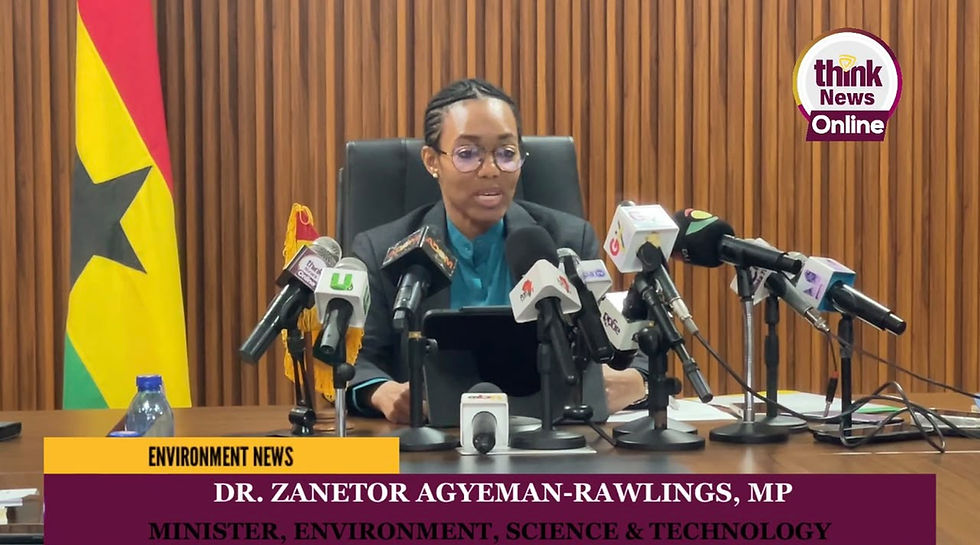
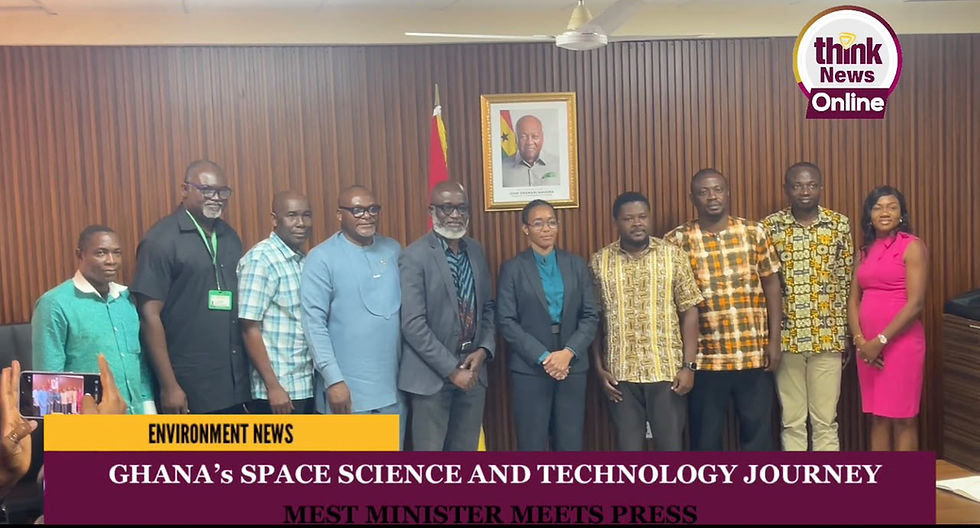
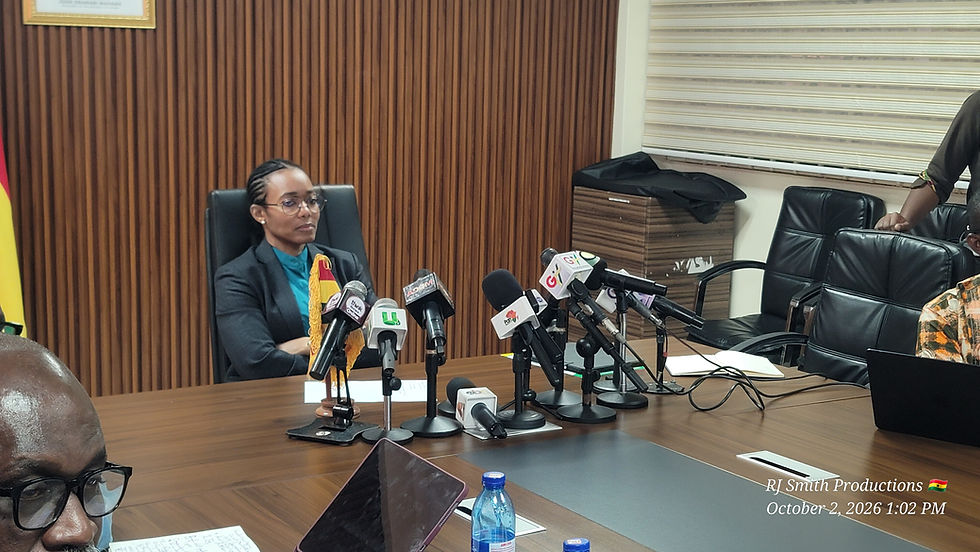
The Minister for Environment, Science and Technology, Dr Zanator Agyeman-Rawlings, said the initiative forms part of Government’s broader strategy to make science, technology and innovation central to national development.
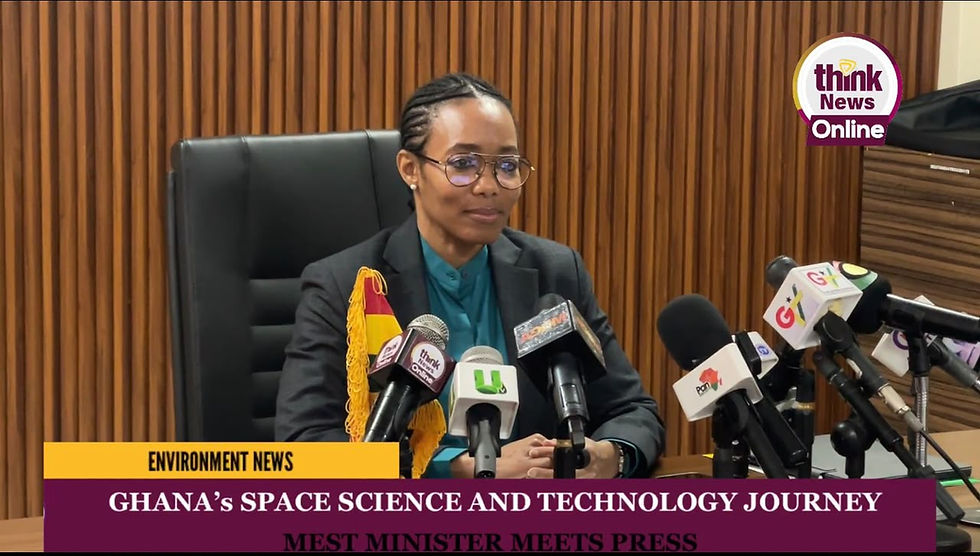
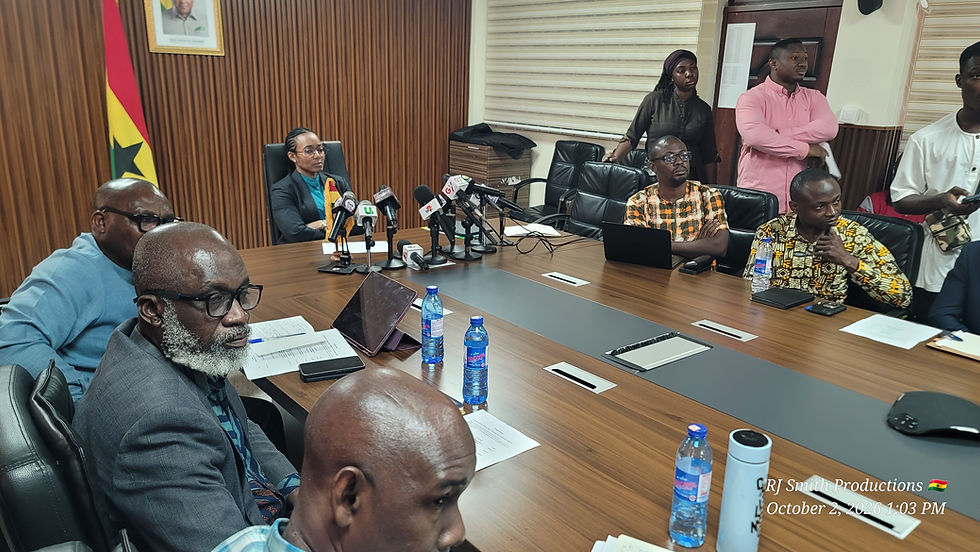
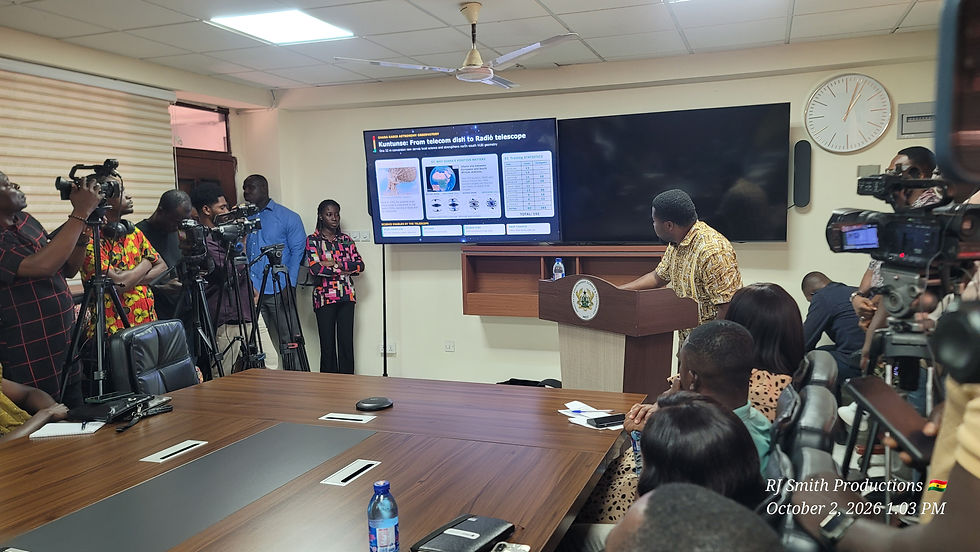
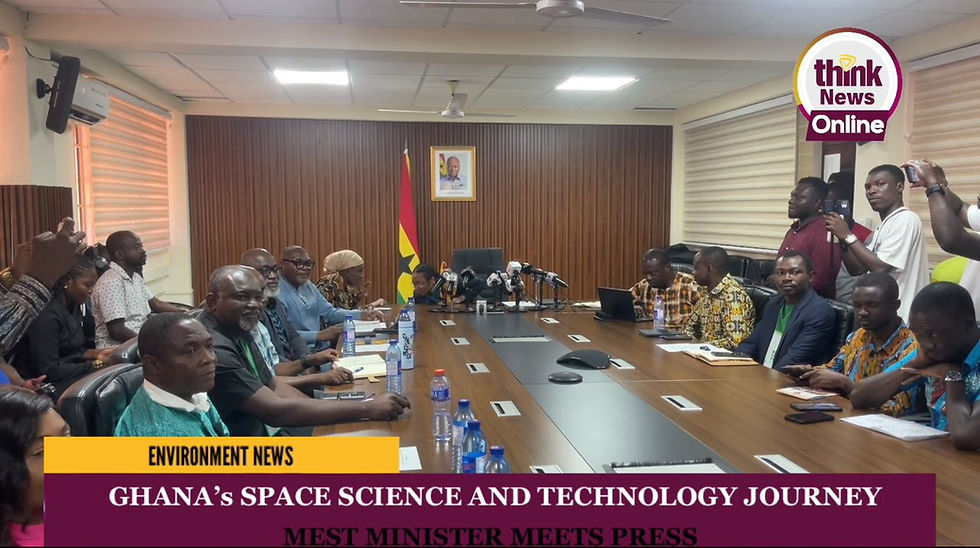
Addressing stakeholders in Accra on Friday, October 2, 2026, on the theme “Ghana’s Space Science and Technology Agenda:
Positioning Ghana for the Space Economy of the Future,” Dr Agyeman-Rawlings said space technology was no longer the preserve of technologically advanced countries but had become critical infrastructure for modern development.
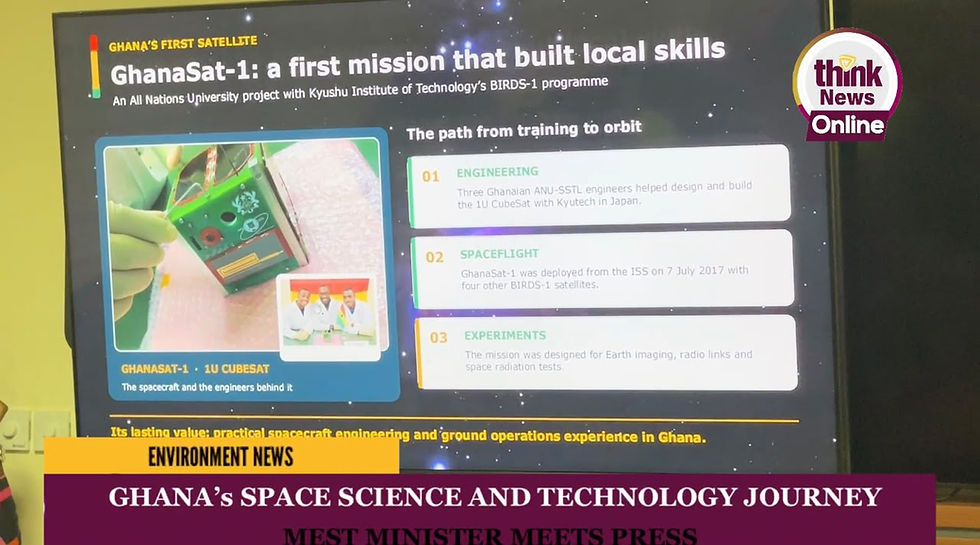
She said Ghana must move beyond viewing space science as a symbol of technological prestige and instead use satellite technology, Earth observation, artificial intelligence and geospatial systems to address practical development challenges.
According to the Minister, space-based technologies could provide valuable information for monitoring forests, water resources, illegal mining, coastal erosion, flooding, drought, agricultural conditions, urban expansion and marine ecosystems.
She said integrating satellite imagery with drones, ground observations, geospatial systems and artificial intelligence could strengthen Ghana’s ability to detect environmental degradation, support enforcement and measure the impact of interventions.
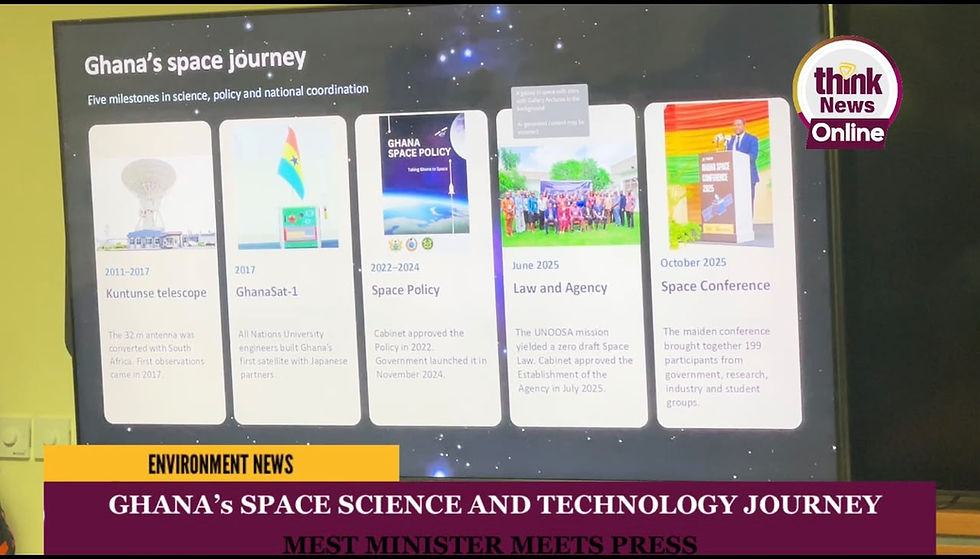
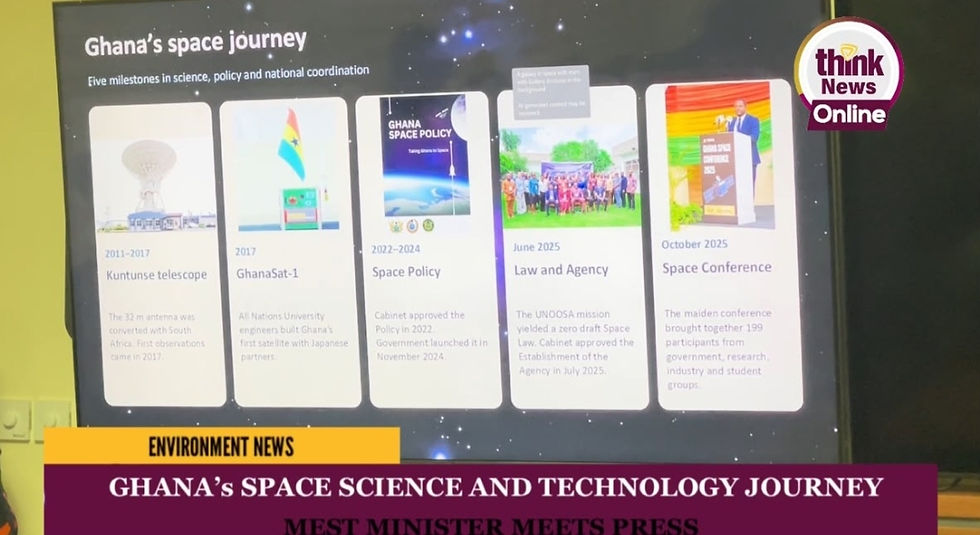
Dr Agyeman-Rawlings disclosed that processes were underway to draft legislation for the establishment of a Ghana Space Agency following Cabinet approval.
She explained that the proposed agency would coordinate Ghana’s space activities, develop national space programmes, facilitate research and innovation, promote public-private partnerships and international cooperation, support space infrastructure development and strengthen Ghana’s participation in the global space economy.
“The objective is not simply to create another institution,” she said, stressing that the country needed a capable national institution that could coordinate and translate space-related investments into tangible development outcomes.
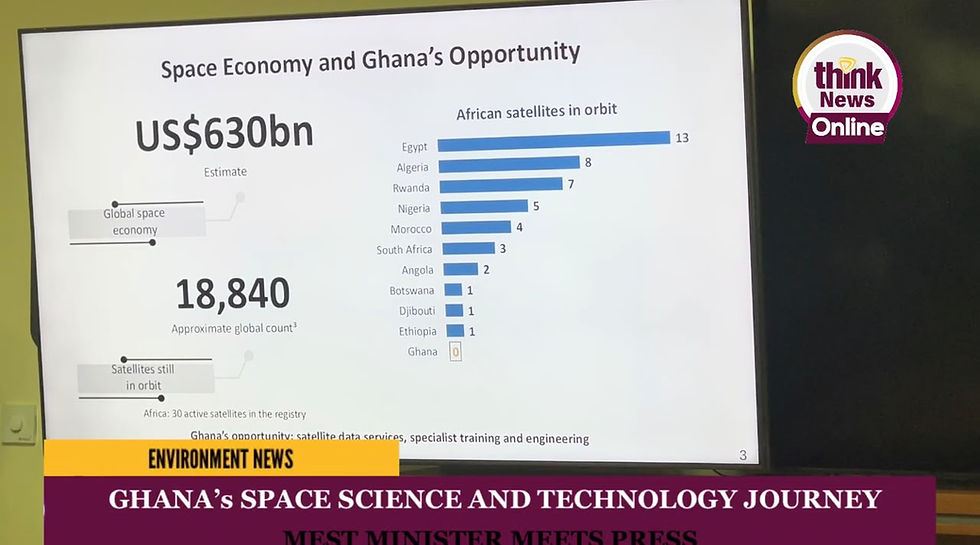
The Minister identified institutional transformation, space infrastructure and data, environmental sustainability and climate action, human capital development, and space entrepreneurship and private-sector participation as key pillars of Ghana’s space agenda.
Dr Agyeman-Rawlings said the Ministry was particularly interested in using space technology to improve environmental governance.
She noted that satellite technologies could support the monitoring of deforestation, illegal mining, land degradation, water bodies, wetlands, biodiversity, coastal ecosystems, waste management and climate-related risks.
She said access to timely and spatially detailed information would allow Ghana to move from largely reactive environmental management towards evidence-based and predictive governance.
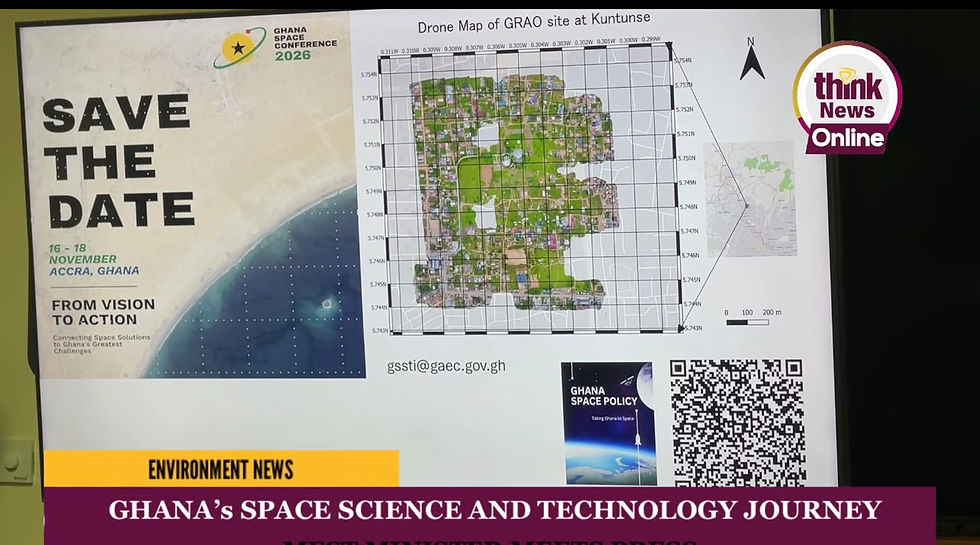
The Minister also called for stronger collaboration between government institutions, universities, research organisations, development partners and the private sector to ensure that satellite data was converted into actionable information for policymaking.
Dr Agyeman-Rawlings further stressed the need to develop Ghanaian expertise in emerging areas of the space economy, including aerospace and satellite engineering, astrophysics, remote sensing, artificial intelligence, robotics, data science, telecommunications, space law and policy, and space entrepreneurship.
“Our greatest national space asset will not be the satellite. It will be the Ghanaian who designs it, builds it, operates it, analyses its data and develops businesses from it,” she said.
She urged stakeholders to create opportunities for young Ghanaians to become creators, innovators and entrepreneurs rather than remaining only consumers of technologies developed elsewhere.
The Minister said Ghana’s space ambitions could not depend solely on government investment, urging the private sector to develop commercial applications and services using satellite and geospatial technologies.
She identified agriculture, insurance, banking and finance, telecommunications, logistics, mining, maritime services, disaster management, urban planning, environmental monitoring and climate services as areas with significant potential.
She also announced plans to strengthen cooperation with international space agencies, development partners, universities and research institutions, while aligning Ghana’s space initiative with the African Union Agenda 2063 and the Science, Technology and Innovation Strategy (STISA-2034).
First 100 days
As part of her First 100 Days Public Engagement Agenda, Dr Agyeman-Rawlings said the Ministry would prioritise stakeholder engagement on the implementation of Ghana’s Space Policy, advance work towards the institutional and legislative framework for the proposed Space Agency, identify priority infrastructure and capacity-development needs, and deepen international and private-sector partnerships.
The Ministry will also promote the use of satellite and geospatial data for environmental management, climate resilience and national development, while creating opportunities for researchers, engineers, students and entrepreneurs to participate in space-related programmes.
Dr Agyeman-Rawlings said the 100-day programme was intended to provide the direction and institutional momentum required to build a sustainable national space ecosystem.
She called on the media and other stakeholders to support efforts to harness space science and technology as part of the Government’s “Resetting Ghana Agenda.”
On his part, Director of the Ghana Space Science and Technology Institute (GSSTI), Dr Joseph Bremang Tandoh, says satellite technology is playing an important role in monitoring Ghana’s groundwater resources and the environmental impact of illegal mining.
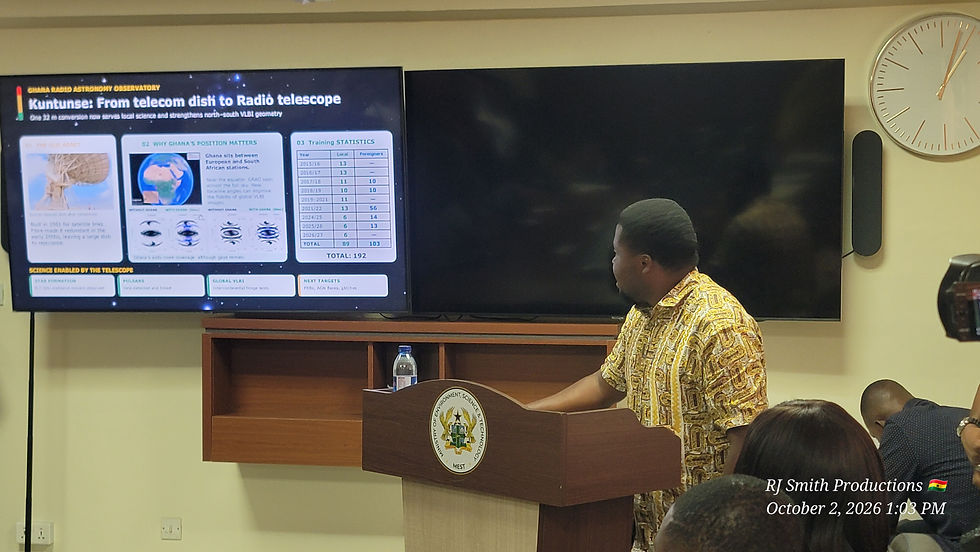
Dr Tandoh explained that satellite missions such as the Gravity Recovery and Climate Experiment (GRACE) can detect changes in the Earth’s gravity field caused by the movement of water, providing information that can help identify areas experiencing groundwater depletion or inadequate recharge.
He said the technology could also be used to monitor the environmental footprint of illegal mining activities.
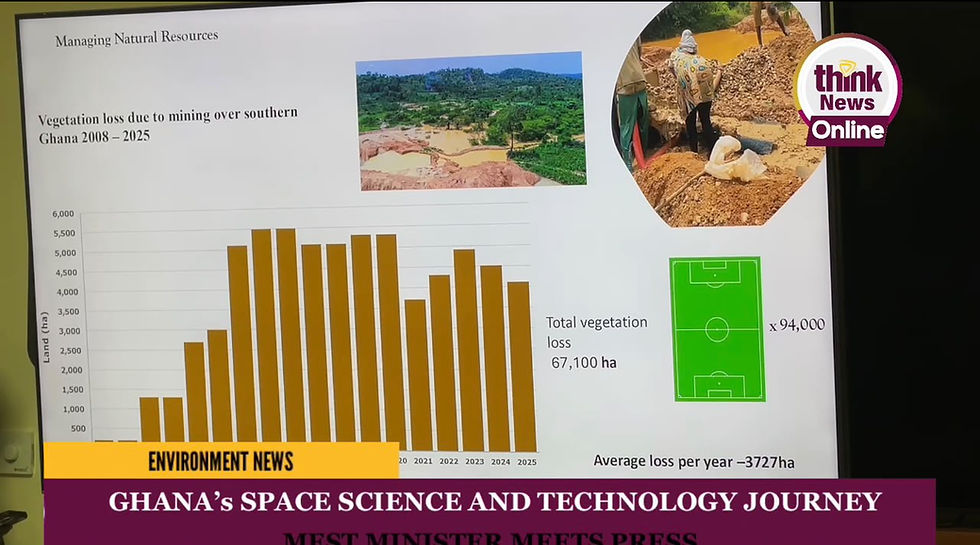
According to him, satellite data indicates that Ghana lost almost 67,000 hectares of vegetation to mining activities between 2008 and 2025, an area equivalent to about 94,000 standard football fields.
Dr Tandoh, however, noted that cloud cover, particularly in southern Ghana, sometimes limits the use of conventional satellite imagery, while radar-based satellite data that can penetrate clouds are relatively expensive.
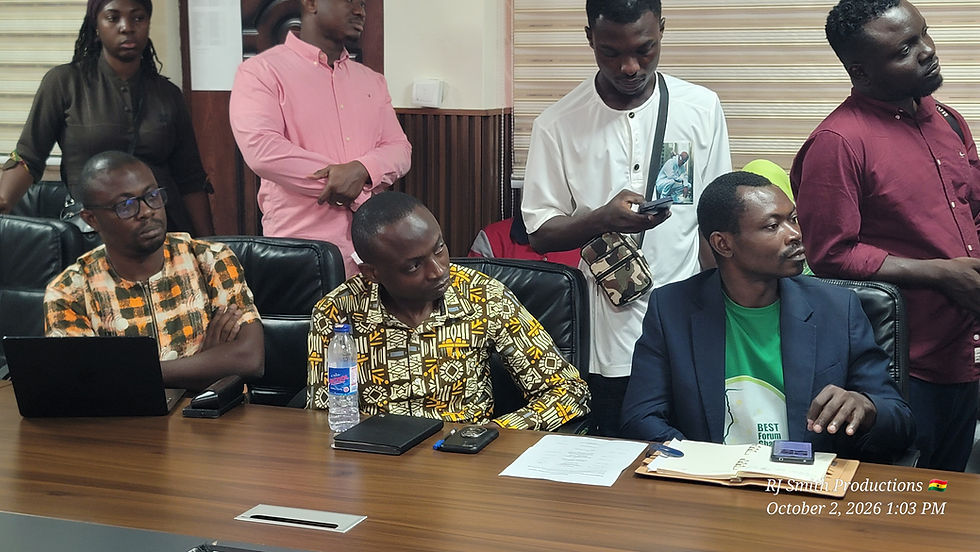
He further clarified that satellite imagery can identify visible changes in water, such as increased brownness or turbidity, but cannot directly determine the concentration of heavy metals such as mercury and arsenic.
He said satellite-based information could nevertheless provide important evidence for policymakers and stakeholders in managing groundwater resources, monitoring mining activities and protecting the environment.
Story by: Joshua Kwabena Smith and Priscilla Dodoo



Comments