


"Eliminating viral hepatitis is within our reach" — Dr. Fiona Braka


The World Health Organization (WHO) Ghana Country Representative, Dr. Fiona Braka, has expressed confidence that eliminating viral hepatitis is achievable, urging governments, development partners and the private sector to intensify efforts to expand access to prevention, diagnosis and treatment services.
Speaking at the commemoration of World Hepatitis Day 2026, Dr. Braka said although Africa has made significant progress in reducing new hepatitis infections, millions of people still lack timely diagnosis, treatment and care, resulting in preventable deaths across the continent.
"Eliminating viral hepatitis is within our reach, but only if proven interventions are available to everyone who needs them," she stated.

She said the message aligns with Ghana's national campaign, "Hepatitis Elimination for Everyone, Everywhere, Right Now," describing it as an urgent call to ensure equitable access to life-saving hepatitis services.
Dr. Braka noted that Ghana already has the necessary tools to eliminate viral hepatitis as a public health threat, including a highly effective hepatitis B vaccine, reliable diagnostic technologies, curative treatment for hepatitis C, and effective long-term treatment for hepatitis B to prevent liver cirrhosis and liver cancer.
She emphasized that integrating hepatitis prevention and treatment into the country's primary healthcare system would improve access, save lives, reduce pressure on health facilities and accelerate progress toward universal health coverage.
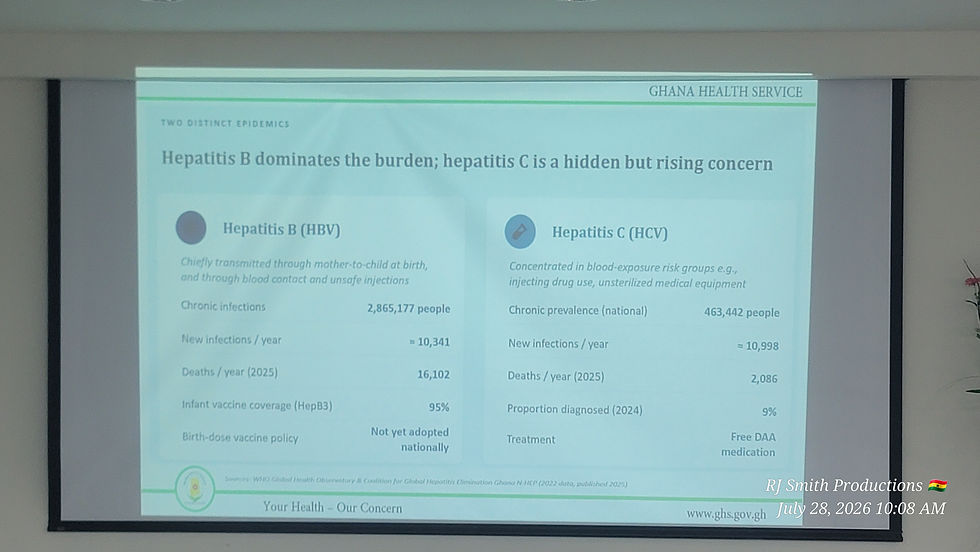
The WHO Ghana Country Representative also welcomed Ghana's progress toward introducing the hepatitis B birth dose vaccine, describing it as a major breakthrough in preventing mother-to-child transmission of the virus.
According to her, while approval from Gavi had already been secured, the recent signing of the implementation arrangements by the Ministries of Health and Finance marks a significant milestone toward nationwide rollout.
Dr. Braka urged stakeholders to expedite the remaining preparations to ensure every newborn receives the vaccine within 24 hours of birth.
"Every missed opportunity to vaccinate a newborn is a missed opportunity to prevent a lifelong infection," she stressed.

She further acknowledged that Ghana's hepatitis response continues to face significant financial constraints and called on the private sector, development partners, philanthropic organizations and other stakeholders to increase investment in hepatitis prevention, diagnosis and treatment.
Dr. Braka also commended the Government of Egypt for donating hepatitis C medicines to Ghana, describing the gesture as a strong example of South-to-South collaboration that is expanding access to treatment for people living with hepatitis C.
She equally welcomed the inauguration of the National Viral Hepatitis Working Group, praising the Ministry of Health and the Ghana Health Service for establishing a platform that will strengthen strategic coordination and accelerate Ghana's hepatitis elimination agenda.

Reaffirming WHO's commitment, Dr. Braka pledged the organization's continued support for Ghana's efforts to achieve the 2030 viral hepatitis elimination targets.
"As WHO, we are fully behind the Government of Ghana on this journey towards the 2030 elimination targets as we work together to prevent new infections, save lives, and ensure that viral hepatitis is no longer a barrier to better health for the people of Ghana," she said.
Story by: Joshua Kwabena Smith


Comments