


"Alcohol intake raises public health concerns only when it exceeds moderate levels" - Ghana Statistical Service


A Data Scientist at the Ghana Statistical Service (GSS), Mr. Peter Yeltulme Mminlaaru, has clarified that alcohol consumption in itself is not considered harmful, but becomes a public health concern when intake exceeds medically defined moderate levels for men and women.
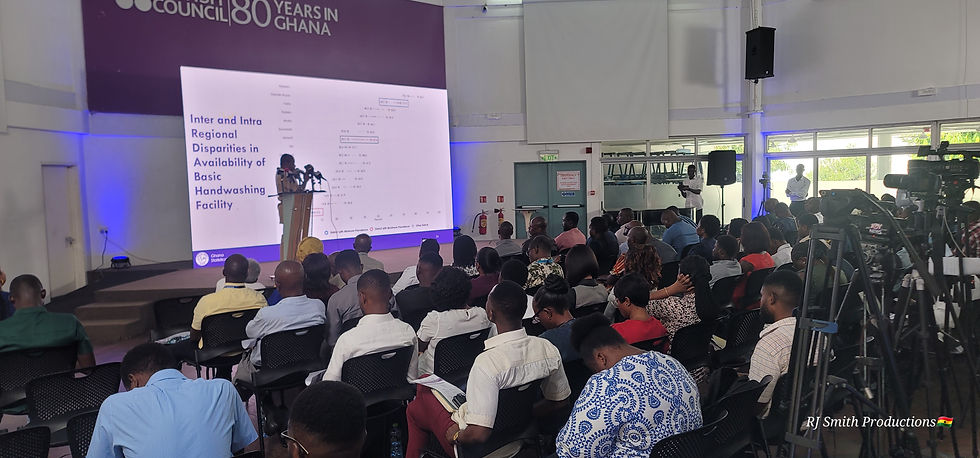
Speaking at the release of the 2022 Ghana Demographic and Health Survey (GDHS) District-Level Reports at the British Council Hall in Accra on Monday, Mr. Mminlaaru explained that the GDHS classifies alcohol intake as excessive only when it goes beyond established moderate thresholds.
According to him, moderate alcohol consumption differs by sex.
For men, consuming up to two standard drinks within a given period is considered moderate and acceptable, while any intake above two drinks is classified as excessive.
For women, he noted, one standard drink is regarded as moderate, and anything above one drink is deemed excessive.

Mr. Mminlaaru stressed that the definition of a “standard drink” depends on the type and alcohol content of the beverage, a principle that has long been reflected in traditional drinking practices.
“Our forebears were very wise. Different alcoholic drinks were traditionally consumed in different containers based on their strength,” he explained.
He illustrated that a bottle of beer is generally considered a single standard drink, which is why it is commonly sold in full bottles at drinking spots.
For men, taking up to two bottles of beer is considered moderate, while consuming more than that becomes excessive.
Similarly, stronger alcoholic beverages are usually sold in smaller measures, reflecting their higher alcohol content.
“The idea is not to discourage alcohol consumption entirely,” Mr. Mminlaaru noted, “but to promote responsible drinking by understanding the limits beyond which consumption becomes harmful.”
He added that the same principles apply to locally brewed beverages such as palm wine and other traditional alcoholic drinks, where moderation is determined by quantity and alcohol strength.
The clarification forms part of findings from the Small Area Estimation reports derived from the 2022 GDHS, which include excessive alcohol consumption among men as one of the thematic indicators.
The reports are intended to support evidence-based planning and targeted public health interventions at the district level.

Mr. Mminlaaru emphasized that understanding what constitutes excessive alcohol intake is critical for both policymakers and the public, as harmful drinking patterns have implications for health outcomes, productivity, and social wellbeing across the country.
Story by: Joshua Kwabena Smith and Hawa Abubakar


Comments