


"About 3 Million Ghanaians are living with Hepatitis B" – Health Ministry


The Ministry of Health has disclosed that an estimated three million Ghanaians are living with hepatitis B, while about 500,000 others are believed to be living with hepatitis C, underscoring the urgent need for expanded prevention, testing and treatment services across the country.
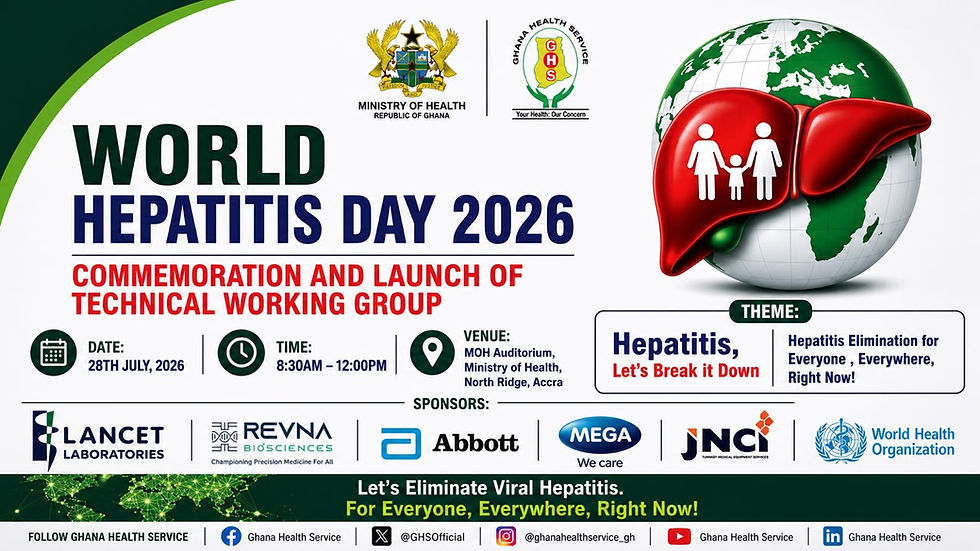
The disclosure was made in a speech delivered by Desmond Boateng, Chief Director of the Ministry of Health, on behalf of the Minister for Health, Kwabena Mintah Akandoh, during Ghana's commemoration of World Hepatitis Day and the inauguration of the National Viral Hepatitis Technical Working Group.
According to the Ministry, many people infected with hepatitis B and C remain unaware of their status because the diseases often progress silently for years while causing irreversible damage to the liver.
The Ministry warned that chronic hepatitis B and hepatitis C remain the leading causes of liver cirrhosis and liver cancer, noting that liver cancer is now the third most commonly diagnosed cancer in Ghana and the second leading cause of cancer-related deaths nationwide. Among men, it is the leading cause of cancer mortality.
In the statement, the Ministry stressed that much of the burden is preventable. Hepatitis B can be prevented through vaccination and effectively managed with treatment, while hepatitis C can be cured with highly effective medicines. Early diagnosis and appropriate care, it said, can prevent disease progression, reduce transmission and save lives.
The Ministry highlighted progress made through the National Viral Hepatitis Control Programme, including strengthened public education, strategic policy implementation and partnerships that have expanded access to prevention, diagnosis and treatment.
It cited the STOP Hep C Ghana Programme as a key intervention, explaining that medicines donated by the Government of Egypt and other partners have enabled thousands of Ghanaians diagnosed with hepatitis C to receive free curative treatment.
The Ministry also reaffirmed government's commitment to fully introducing the hepatitis B birth-dose vaccine into the routine immunisation programme, saying the vaccine—administered within the first 24 hours after birth—is critical in preventing mother-to-child transmission.
As part of the country's prevention strategy, the Ministry said hepatitis education, risk assessment, screening, vaccination and referral services will be integrated into the Free Primary Healthcare Programme through CHPS compounds, health centres, polyclinics and district hospitals.
However, the Ministry acknowledged that major challenges remain, revealing that only about one percent of people living with hepatitis B in Ghana have been diagnosed, while treatment coverage remains very low.
It further noted that although hepatitis C medicines are provided free of charge, the cost of confirmatory testing continues to be a significant barrier, alongside limited laboratory capacity, inadequate surveillance systems and financing constraints.
To address these challenges, the Ministry pledged to strengthen vaccination programmes, expand affordable screening and diagnostic services, decentralise hepatitis care, improve referral systems and work with the National Health Insurance Authority and other stakeholders to develop sustainable financing mechanisms.
The newly inaugurated National Viral Hepatitis Technical Working Group has been tasked with coordinating Ghana's hepatitis elimination agenda by supporting the implementation of a costed national strategy, strengthening surveillance, expanding affordable diagnosis and treatment, and integrating hepatitis services into the country's primary healthcare system.
The Ministry urged all Ghanaians to know their hepatitis status through testing, receive vaccination where eligible and seek early treatment if diagnosed, stressing that eliminating viral hepatitis as a public health threat will require collective national action.
Story by: Joshua Kwabena Smith


Comments