


200 Ghanaian Entrepreneurs receive AI, business training in Accra


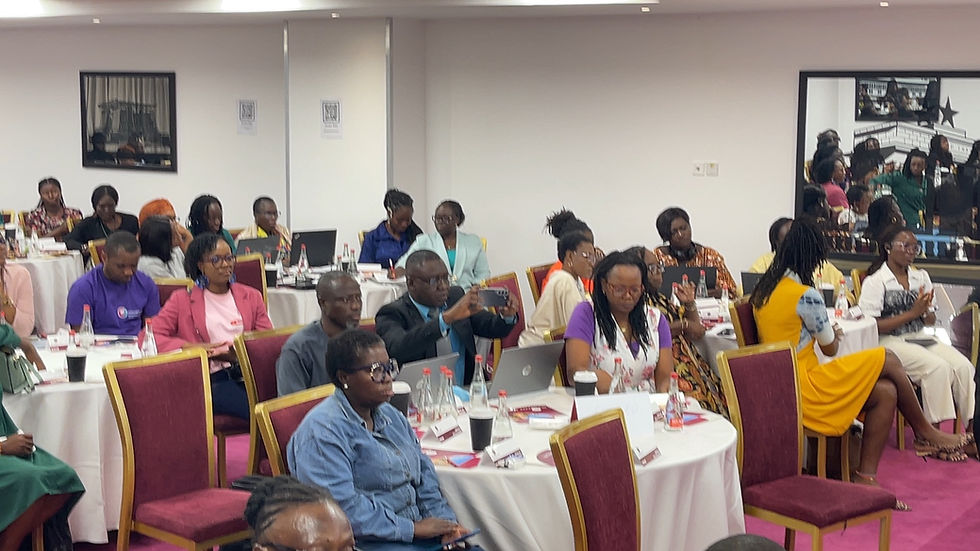
About 200 Ghanaian entrepreneurs are taking part in a two-day entrepreneurship workshop in Accra focused on artificial intelligence (AI), digital payments, logistics, access to finance and export readiness, as the International Trade Centre (ITC) SheTrades Initiative partners with UPS, Visa and the Ghana Export Promotion Authority (GEPA) to strengthen women-led businesses.
The free training, held on 6 and 7 August at Accra City Hotel, brings together established business owners and aspiring entrepreneurs to build digital skills, improve access to finance and prepare businesses to compete in Ghana and across the African Continental Free Trade Area (AfCFTA).
Partners supporting the programme include Ecobank, the Embassy of Switzerland in Ghana through the State Secretariat for Economic Affairs (SECO), and the Fearless Fund.
Speaking to journalists, Kritee Sharma, Partnerships Lead for ITC SheTrades, said the initiative demonstrates the power of collaboration in helping women-owned businesses grow.
“I’m here in Accra representing the International Trade Centre’s SheTrades Initiative, which is a global ecosystem programme where we bring together all the actors who have a role to play to support women, and we also provide women the right skills and capacities to grow their business and access new markets,” she said.
She noted that government institutions, financial institutions, development partners and private companies had come together to provide entrepreneurs with practical support.

“We have the Ghana Export Promotion Authority here, which is also the SheTrades Ghana Hub, UPS, Visa, Ecobank, the Embassy of Switzerland, which is a core ITC SheTrades supporter, and the Fearless Fund in the room. That just goes on to show the power of partnerships.”
According to Ms. Sharma, the workshop is designed to provide entrepreneurs with a complete package of business support.
“We’re going to talk about access to finance, how Ecobank can share its financial offerings with women. We’ll also talk about digital marketing, leadership and communications. We’re giving women a package on how they can succeed, starting from the basics of entrepreneurship through digital transformation, AI, access to finance and access to markets.”
A major focus of the workshop is helping entrepreneurs adopt artificial intelligence in their day-to-day business operations.
Ms. Sharma stressed that participants were not expected to become AI experts within two days.
“We don’t want them to be AI experts overnight, but we want them to understand how AI can help them save time, automate tasks and expand new horizons for their businesses,” she said.
She added that AI should complement rather than replace human decision-making.
“AI can never replace human judgment. We are supposed to train AI so it can support us. It can never be the other way around.”
She encouraged participants to fully engage with the training and make use of the opportunities presented by the various partners.
“They have to really own this workshop. They have to make the most of this community—not just of entrepreneurs, but also of partners. You have government that can help with market access and research support, UPS that ships products beyond borders, Visa, which is a fintech leader, and ITC, which is a UN agency.”
Ms. Sharma said entrepreneurs should leave the programme with practical actions they can immediately implement.
“Each entrepreneur should identify two immediate steps they can take. It could be using AI to automate social media or improve market research or product descriptions.”

She revealed that high-performing participants would be selected after the workshop for one-on-one coaching to help integrate AI into their business operations.
“I really hope this is only the first step in the AI journey of women entrepreneurs. When we return next year, I want them to show us what they achieved because of this programme.”
Speaking during the opening ceremony, Magdalena Wuest, Deputy Head of Cooperation at the Embassy of Switzerland in Ghana, said women’s economic empowerment requires collaboration among governments, development partners, financial institutions, businesses and entrepreneurs.
“I’m very delighted to be here, and I’m so impressed by all these women leaders sitting in this room,” she said.
She said Switzerland, through SECO, continues to support Ghana in building a resilient and forward-looking economy.

“Our cooperation focuses on strengthening local governance, enabling the private sector to generate jobs and income opportunities, and promoting environmentally sustainable economic development.”
She said Swiss investments span sectors including cocoa, cashew, palm oil, chia, textiles and digital trade.
“Our investments enable businesses to become more competitive and access regional and international markets.”
Ms. Wuest added that Switzerland supports programmes that improve women’s access to finance, markets and entrepreneurship skills.
“Our partnership with ITC is closely aligned with our cooperation objectives. As ITC’s host country and a long-standing partner, Switzerland works closely with ITC to advance trade-led sustainable development.”

She said shared priorities include strengthening small business competitiveness, improving market access, supporting business institutions and ensuring that women, young people and vulnerable communities benefit from trade.
“The SheTrades Initiative is an important part of this shared commitment, and we are proud to support it.”
Encouraging participants to make the most of the workshop, she said the presence of multiple public and private institutions reflected a shared commitment to inclusive economic growth.
“The presence of so many public and private partners today is especially encouraging. It reflects a shared understanding that women’s economic empowerment cannot be achieved by one institution alone. It requires coordinated action across government, development partners, the private sector, financial institutions and entrepreneurs themselves.”

La’Kerri Jackson, Global Director of Social Impact at UPS, said the workshop responds to challenges faced by entrepreneurs worldwide, particularly limited access to capital and international markets.
“There are many challenges that entrepreneurs and small businesses face, from exporting challenges all the way to the lack of access to capital. It is not specific to Ghana; it is happening across the globe,” she said.

She explained that UPS works with partners to create ecosystems that help entrepreneurs succeed.
“We build strong partnerships that create a strong ecosystem to help entrepreneurs succeed.”
She cited partnerships with Opportunity International, the Fearless Fund, and ITC SheTrades as examples of initiatives supporting entrepreneurs through financing, training and business development.
Ms. Jackson said AI training was intended to remove the fear surrounding emerging technologies.
“Many people don’t have access, don’t have knowledge and don’t really know how to use AI. Through workshops like this, we ensure that small businesses understand AI. It is not as hard as we think.”
She noted that entrepreneurs could already access free AI-powered tools through platforms they use every day.

“There are practical tools available through WhatsApp, Instagram and other platforms that can help create marketing materials and support businesses without investing a lot of money.”
While acknowledging concerns about overreliance on artificial intelligence, she said entrepreneurs should see AI as an assistant rather than a replacement.
“The angle people should take is that AI is a thought leadership partner. You are the brand. You have the intellect and the intellectual property. AI is taking what you put into it and producing a result.”
“There is a danger in becoming too dependent on it, but everybody has to exercise discipline and continue to rely on their own intellect.”
She added, “AI can’t just cook things up. You have to give it a prompt. The brilliance that we have cultivated over the years is what we invest into AI. It’s just a thought leadership partner.”

Organisers said the first day focuses on established businesses, with sessions on AI-powered customer research, digital marketing, sales tracking, WhatsApp Business, e-commerce, logistics, cross-border trade and digital payments. Financial institutions, including Ecobank, are providing guidance on accessing business finance and improving loan applications.
The second day targets aspiring entrepreneurs, covering business idea validation, the practical use of ChatGPT, Canva and Google Workspace, LinkedIn profile development, communication, leadership and negotiation skills.
The workshop also provides opportunities for participants to interact directly with financial institutions, government agencies and development partners to build networks and explore market opportunities.
According to Ghana’s Ministry of Finance, small businesses account for more than 90 per cent of enterprises and contribute nearly 70 per cent of the country’s Gross Domestic Product.

Organisers say equipping entrepreneurs with digital skills, AI knowledge and stronger business networks will help more Ghanaian businesses compete in regional and international markets while taking advantage of opportunities under the AfCFTA.
Story by: Joshua Kwabena Smith


Check out these simple tips to help you take your website to the next level today. Happy building everyone.
Thank you for sharing this uplifting post about 200 Ghanaian entrepreneurs receiving AI and business training in Accra. It's truly inspiring to see such a strong commitment to equipping local business leaders with future-ready skills. For executives and managers in Accra looking to deepen their understanding of AI and harness its full potential, I highly recommend the top-rated artificial intelligence (ai) productivity course & workshop for managers in Accra, Ghana—a fantastic opportunity to gain practical strategies for leveraging AI to boost efficiency and drive innovation.
Thank you for sharing this uplifting post about the 200 Ghanaian entrepreneurs receiving AI and business training in Accra. It's truly inspiring to see such a strong commitment to equipping local business leaders with future-ready skills that will drive innovation and economic growth across the region. For executives and managers in Accra looking to deepen their understanding of AI and harness its full potential for their organizations, I highly recommend the top-rated artificial intelligence (ai) productivity seminar & course for executives in Accra, Ghana—a fantastic opportunity to gain practical strategies for leveraging AI to boost efficiency, enhance decision-making, and stay ahead in today's fast-evolving business landscape.